
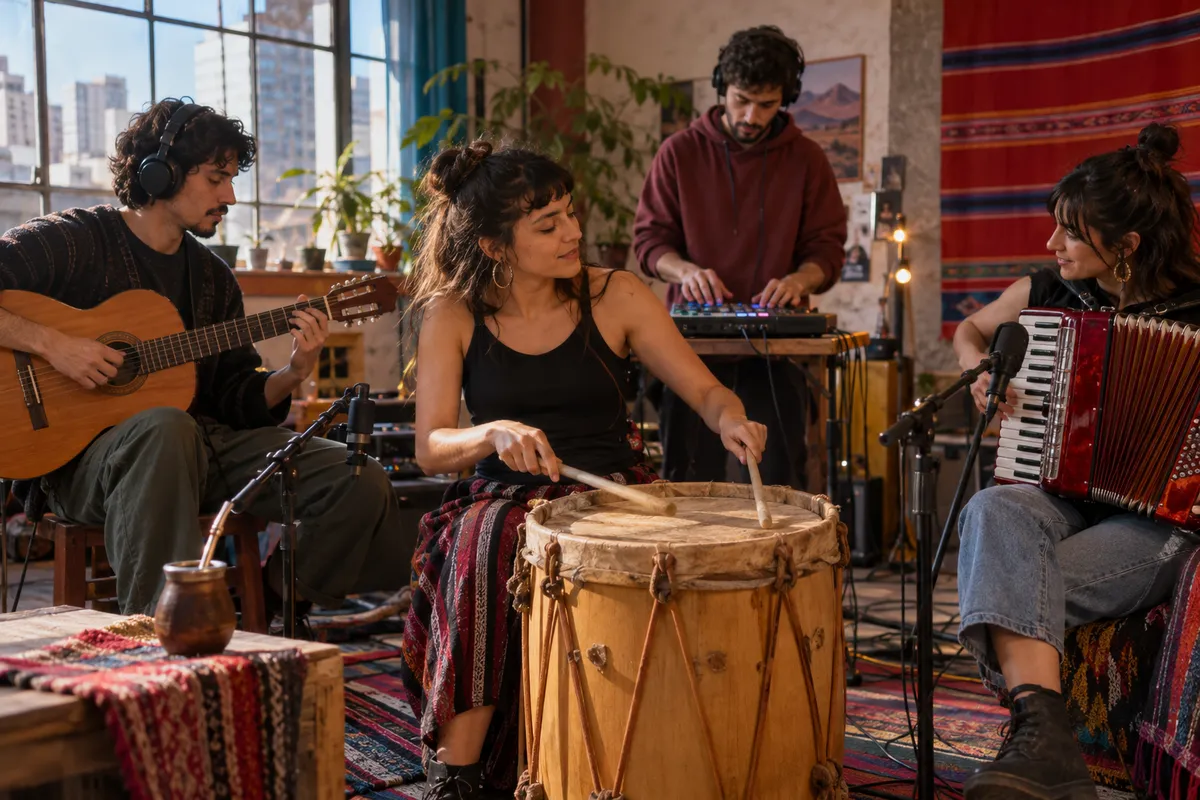
Argentina's countryside is having a pop moment. According to a Yahoo report, a new wave of younger artists, including Milo J, Cazzu, Broke Carrey and Feli Colina, is embracing the music and traditions of rural Argentina and carrying once-niche sounds to youth audiences and global platforms.
The report describes a scene that blends chacarera, zamba, chamamé and cumbia with trap, reggaeton and electronic music. It also argues that this roots movement is feeding national pride, regional visibility and political expression at a time of economic and social uncertainty.
This piece sticks to one angle: why folklore is working as a language of belonging for a generation, and why that sits so close to politics.
The Sound: Old Rhythms, New Rooms
The fusion is the point. Yahoo frames these artists as pairing traditional forms with the genres that dominate streaming, rather than treating folklore as a museum piece. Chacarera, zamba and chamamé sit alongside trap and reggaeton, and electronic production gets a seat too.
If you follow Latin pop, the pattern is familiar: local sounds keep finding global audiences without sanding off their accents. Yahoo's description frames the revival as a way of staving off pop homogenization, the sense that every chart starts to sound like every other chart. Folk rhythms are a pretty effective antidote, since they carry a specific place in their DNA.
The Names to Know
Yahoo points to Milo J, Cazzu, Broke Carrey and Feli Colina as part of the new wave. The source material doesn't break down individual songs or albums, so rather than guess at tracklists, here's the takeaway it supports: these are major youth-facing artists, and their embrace of roots sounds is what moves the movement from niche to mainstream.
The Politics: Why Folklore Feels Charged Right Now
Yahoo ties the revival to a country navigating instability, polarized politics and renewed debates over national identity. In that climate, it argues, folklore becomes a powerful language for both belonging and dissent.
That's a smart reading of how music works. A zamba or a chamamé isn't automatically a protest song. But when a country is arguing about who it is, choosing to sing in the idiom of its own countryside is a statement whether or not anyone writes a manifesto. It's hard not to see the appeal for a young audience: pride and pushback can live in the same song.
Beyond Buenos Aires
There's also a map beneath the music. Yahoo says the movement is boosting regional visibility, and one of the angles it raises is regional Argentina pushing back on the dominance of Buenos Aires. Pop history is full of scenes defined by a capital city. A revival rooted in provincial traditions flips that script, putting the countryside's rhythms at the center instead of the margins.
Why It Lands With Gen Z
Yahoo's framing is that traditional music is becoming a soundtrack for young people's identity, regional pride and anti-establishment feeling. My take: it makes sense that this generation, raised on algorithmic sameness, would find something rebellious in sounds that can't be mistaken for anywhere else. Authenticity has been a pop buzzword for years, but here it comes with actual geography and actual history attached.
The trap-meets-folklore pairing is the clever bit. Trap and reggaeton are the language of young listeners; chacarera and chamamé are the language of inheritance. Put them in one track and you get a conversation between generations, not a lecture from one to the other.
What to Watch
The revival is still unfolding, and Yahoo's report is a broad portrait rather than a chart analysis, so it's too early to say how far it travels. But the ingredients are all there: major artists, youth audiences, global platforms and a country in the middle of an identity debate.
If you want an entry point, start with the artists Yahoo names and listen for the seams, the moment a trap beat makes room for a rhythm older than anyone in the room. That's where this story is happening, and it's a reminder that the freshest sound in pop can be the one that's been waiting in the countryside all along.