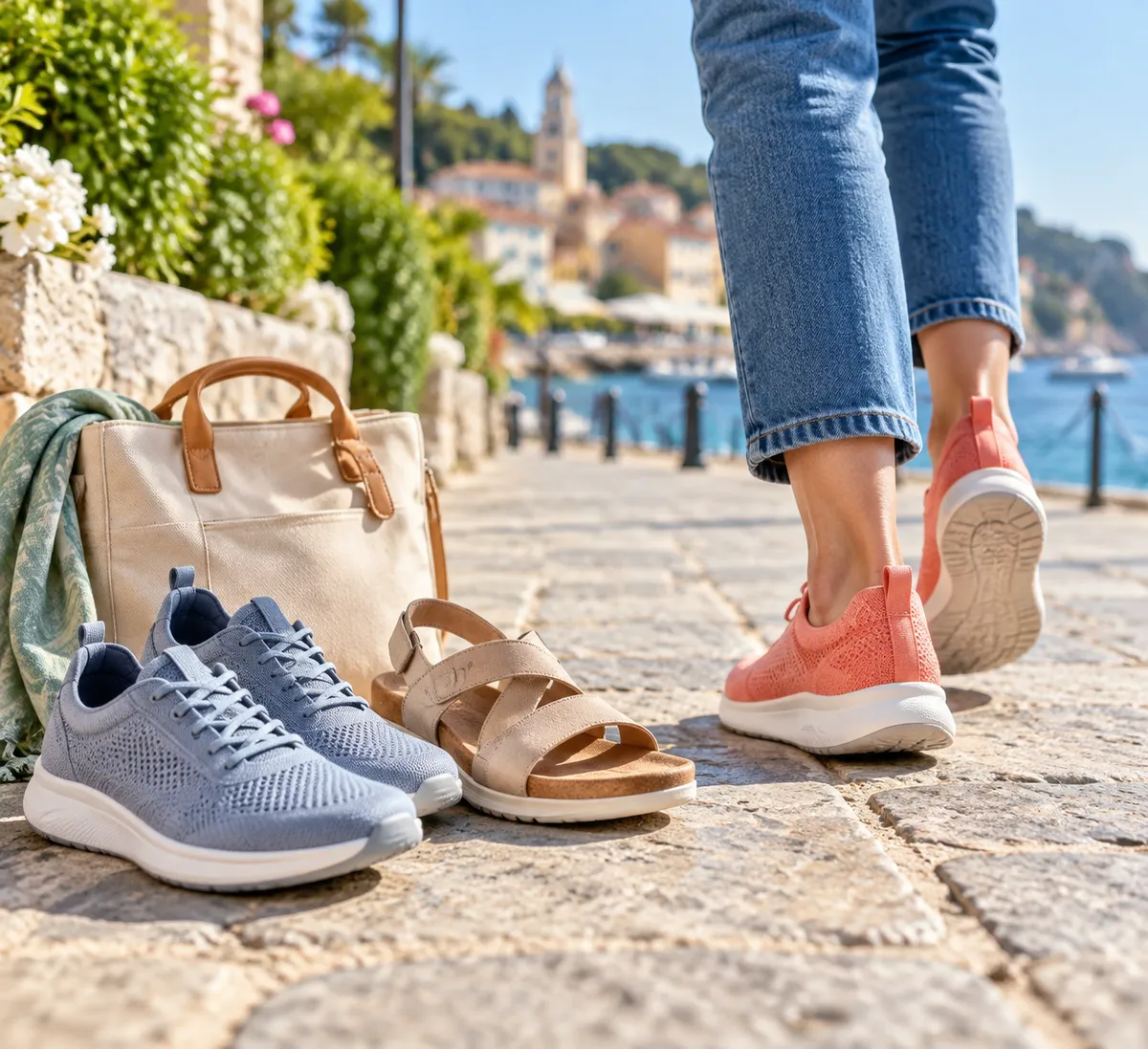
BuzzFeed Shopping just published a roundup of 26 shoes that reviewers say keep their feet blister free, with a tagline that doubles as a vow: "Not a single sore shall ruin your adventures this year." The list is aimed at everyday wear, travel, walking, and long days on your feet.
A caveat up front: the details of the individual picks, meaning brands, styles, and prices, aren't something I can responsibly reproduce here. What I can dig into is the pitch itself, and it's more revealing than a shoe list usually is.
The Real Product Is Proof
The hook of BuzzFeed's roundup isn't a designer name or a trend. It's the phrase "reviewers say." Every one of the 26 picks is framed as reviewer-approved, which tells you what the shopper is really buying: the word of strangers who have already suffered on your behalf.
That makes sense. Comfort is the one thing a product photo can't show. A sandal can look flawless online and still carve a groove into your heel by hour three of a city day. So the review section becomes the fitting room, and a list built on those reviews becomes a kind of crowdsourced field report.
It's hard not to see why this format keeps working. "Cute" is easy to judge from a screenshot. "Won't wreck me" requires testimony.
Why Now
Comfortable footwear is what shopping analysts call a high-intent topic: people searching for it usually plan to buy. The timing fits, too. As people plan travel, commute more, and look for shoes that can handle long walking days without pain, a blister-prevention list lands right where the need is.
That's my read of the moment rather than a hard statistic, but anyone who has packed for a trip knows the math. You can bring one great outfit. You cannot bring a second pair of feet.
How to Read a List Like This
A roundup of 26 reviewer-approved shoes is a starting point, not a prescription. A few ways to get the most out of any list in this genre:
Treat "blister free" as a claim, not a guarantee
The BuzzFeed piece describes these shoes as ones that claim to help prevent blisters. That's a meaningful distinction. Feet differ, and a shoe that's heaven for one reviewer may rub another raw. The reviews are evidence, not a promise.
Match the shoe to the day
The list spans everyday wear, travel, walking, and standing for long stretches. Those are different jobs. A shoe that survives an airport terminal isn't automatically the one for a wedding reception, and a work-day pick may not be your cobblestone pick. Shop for the occasion you actually have.
Read the middle reviews
Five-star raves and one-star rants are the loudest. The useful information often sits in the three- and four-star notes, where people mention sizing quirks, break-in periods, and what happened on day two. That's my advice, not BuzzFeed's, but it's the kind of detail that decides whether a pair stays or goes back in the box.
The Unglamorous Genre We Secretly Love
There's a quiet pop-culture truth here. Fashion media loves a spectacle: the red carpet heel, the runway platform of improbable height. But the shopping stories people actually click on are often about survival. "Shoes you can actually walk in" is a fantasy with a lot of fans, because nearly everyone has a pair in the closet that photographs beautifully and hurts immediately.
A blister-prevention list is the opposite of aspirational. It's a promise of a boring, wonderful outcome: nothing happens to your feet. No plot twist, no drama, no bandage subplot.
The Bottom Line
BuzzFeed's roundup is a handy hunting ground if you're gearing up for travel or long days on your feet, with the useful bonus that every pick comes with real-user endorsement attached. Go in with realistic expectations, check the reviews that match your own needs, and give any new pair a short test run before the big trip.
Because the best sign a shoe is working is the one nobody ever talks about: you forgot you were wearing it.